Archives
The Last Lighthouse Keepers Are Writing It All Down
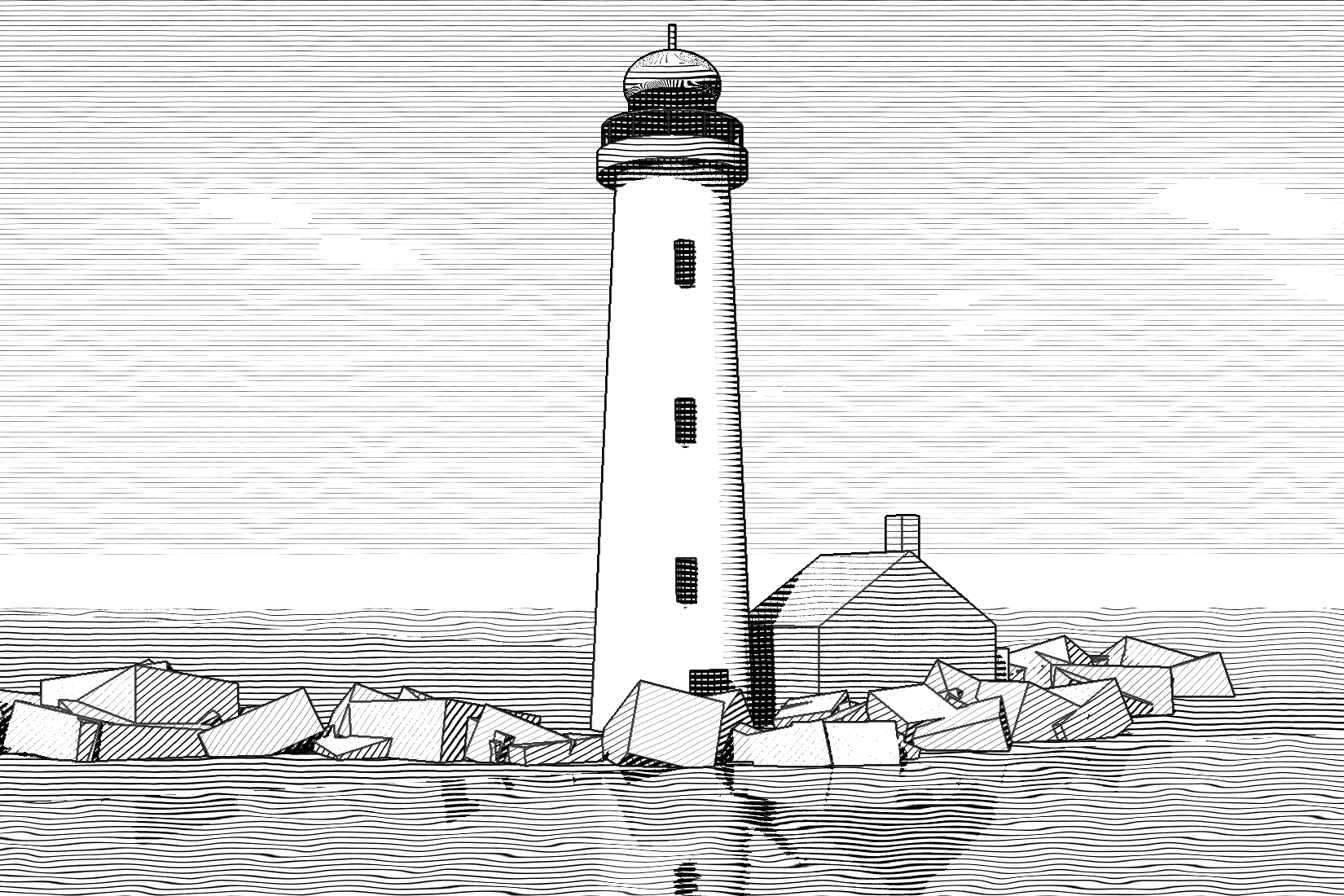
Automation emptied the towers decades ago. Former keepers are now building an archive of a job that no longer exists.
October 2026
The Maintenance Issue
Long after the ribbon is cut, someone is still holding the ladder.
October 2026 · Vol. IV, No. 10
The unglamorous work of keeping things going.
From the editor
Nobody cuts a ribbon for a patched road. Nobody names a wing after the person who cleared its gutters. We remember who built the bridge and the lighthouse, but rarely who kept them working the next morning, and the morning after that. This issue, our largest, is for them.
Mika Sato’s In Praise of Maintenance makes the argument: we credit makers, forget keepers, and pay dearly for the habit. Everything else in these pages is evidence. Ruth Hollis sat with retired keepers in Port Ellery for The Last Lighthouse Keepers Are Writing It All Down, and at a folding table in Asterby for The Repair Café That Outlived Its Town. Daniel Okafor met six people tending a 1984 batch system for The People Who Keep Forty-Year-Old Software Running, then an engineer who reads bridge data by hand on Sundays for Every Bridge Has Sensors Now. Nobody Is Reading Them.
Ilona Varga’s Who Checks on the Seeds? begins with a freezer alarm at 3 a.m. Erik Lindqvist’s An Observatory on Borrowed Time follows astronomers racing their funding to finish a survey begun in 1931. Nadia Rahman’s What It Takes to Repair a Tractor You Own asks who is even allowed to do the work. And Tiago Mendes, in The Towns That Voted to Fix Their Roads Before Building New Ones and The Ministry Nobody Notices Until It Fails, shows how governments pay for upkeep—or don’t.
Maintenance has a cruel arithmetic: done well, it looks like nothing at all. Only failure makes the news. One issue won’t change that. For one month, though, we can look.
Our building’s boiler has not failed in six winters, and until this week I never wondered why. The answer is Aldo Fenn, who checks it every Thursday before we arrive and has done so, unthanked, for 11 years. I have now thanked him. Read this issue, then find your Aldo. Every place has one.
Culture
Archives
Automation emptied the towers decades ago. Former keepers are now building an archive of a job that no longer exists.
Repair
The mill closed, the bank left and the post office became a flat. On Saturday mornings, a folding table in the old library still fixes about forty things.
Technology
Infrastructure
Payroll, pensions and the water bills of a small country still run on code older than the engineers maintaining it. Meet the night shift that keeps it alive.
Right to repair
A farmer, a broken sensor and a dealer two hundred miles away. Inside the quiet fight over who is allowed to fix modern machines.
Engineering
Strain gauges, tilt meters and accelerometers stream millions of readings a day. The engineers meant to interpret them are a vanishing species.
Politics
Public works
A “fix it first” rule sounds like common sense. In three provincial districts it rewired local politics, and not always in the way its backers expected.
Government
Public works departments are funded like afterthoughts and blamed like villains. A year inside one shows why.
Ideas
Essay
We celebrate whoever builds a thing and forget whoever keeps it standing. That hierarchy is costing us more than we think.
Science
Biodiversity
A vault in the hills holds 400,000 samples meant to outlast us. Keeping them alive takes a small crew, a freezer alarm and a very long to-do list.
Astronomy
Its telescope is a century old and its funding runs out in March. Its astronomers are using the time they have left to finish a sky survey begun in 1931.


